The Worsening
A theory of tech anger

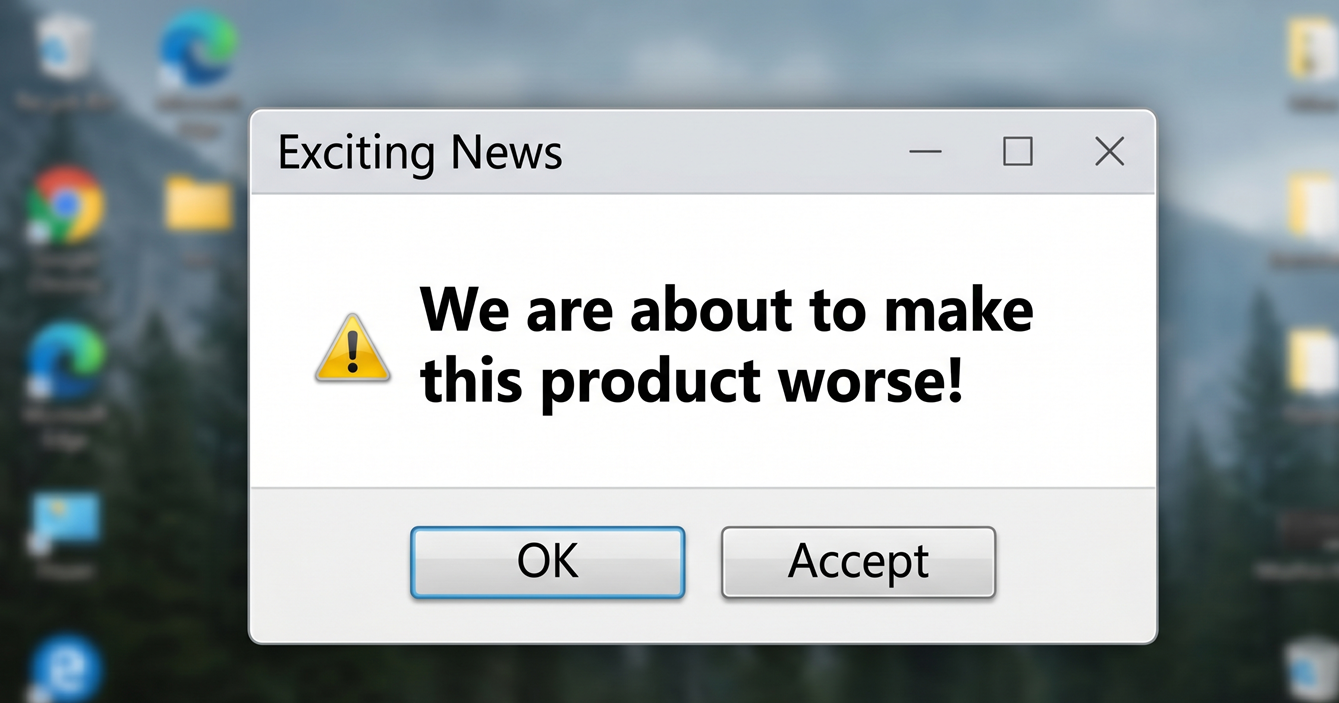
I came across this pretty funny list over the weekend. If you skip over the standard anti-capitalist/anti-AI/anti-tech cant at the beginning and jump right to the list, you kind of have to admit it: the guy has a point. A lot of tech products really do suck. I’m no stranger to this observation; I literally wrote a blog post titled “We Should be More Excited about Making Software Not Suck,” but it got me thinking that there’s probably something deeper going on. It’s not just that the products are bad but that they get worse out from under us.
A lot of products and services in the world are bad, but tech is different because their products can change after you purchase them in a way that very few other things can. There’s something uniquely infuriating about having something you already own become worse, and it’s especially galling if it’s something you (used to) love.
I have an ancient BMW (2007 E92), and I love it. It’s a blast to drive, it’s comfortable and reliable. Heck, even the styling is nice, to my eyes at least—it’s Bangle-infected for sure, but not terminally so. The fact that I’d never buy a current BMW means nothing. I still get a happy little dopamine hit every time I drive that delightful car.
If my car were software (if I could, say download a car), my current car would have become a modern BMW. One winter day, I’d push the seat warmer button and be informed by a cheerful popup that, in order to enhance my experience, I now needed to subscribe to BMW Butt Comfort Pro for $15/month.[1] The kidney grille would enlarge to the size of my current windshield. My beloved manual transmission would, overnight, become a slushy paddle-shifted automatic. Turning on climate recirc would morph from a button press to a distracted sojourn through a laggy touchscreen menu tree five levels deep. I would hate getting in that car. It would make me sad every day.
Economists could measure the “utils” of that car along with its reliability, it’s efficiency, and safety and tell me that I am better off than I was in the past. In fairness, I’m certain that modern BMWs are genuinely more efficient and safer than mine, but I’d still hate it and mourn the loss.
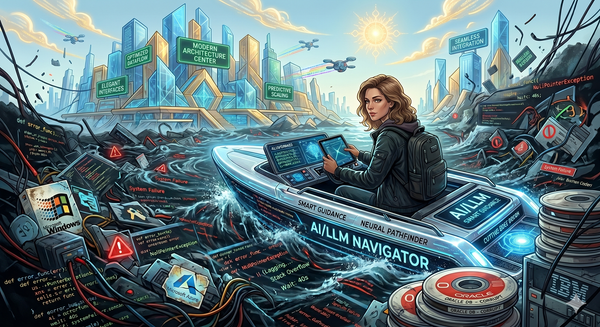
This happens with software constantly. Some of it is chasing easy revenue (usually adding ads) and some of it is change-for-change’s sake by companies that have such a captive customer base that they simply don’t care if their users like it. iOS 26 (and to a lesser extent, MacOS Tahoe) are emblematic of the latter variety, while Windows majestically combines both.
Even if those decisions, over time, kill the company and see it replaced by a better alternative—in other words, if competition eventually works, which it does—consumers are still always either in the process of being screwed or expecting to be screwed even as the objective material quality of what they possess continues to improve.
We’re all just waiting for it to happen with AI. Of course OpenAI is adding ads. Of course the harnesses are an attempt at lock-in. Of course the less-reputable AI companies are already engaging in dark patterns and creepy emotional manipulation. You can see the business models evolving in real time, and even if they haven’t destroyed a product you love now, they probably will.
What’s worse is that many business models are premised on making a product compelling and then “altering the deal” once users are locked in. The companies have to behave this way, otherwise they’ll die. Social media is the most common example, but the general trend is common among many products.
It doesn’t even require lock-in to be infuriating. Switching costs are real and significant, even within competitive sectors. It’s one thing to switch to a different car brand every ten years on your own schedule and quite another to have to find an alternative photo editing suite right now because the one you’re using just deprecated a feature you needed or blacked out your photos until you pay up.
It’s a structural, incentives-based problem: if a company can change a product to be more profitable after selling it, they will be incentivized to do so. If removing expensive features, piling on ads, or charging for what used to be free is easier than innovating (it is), then they’ll be incentivized to do that. Even if those decisions, over time, kill the company and see it replaced by a better alternative—in other words, if competition eventually works, which it does—consumers are still always either in the process of being screwed or expecting to be screwed even as the objective material quality of what they possess continues to improve.
I think this problem might be at the core of what economists miss when evaluating the current state of consumer (un)happiness and especially the irrational dislike of new technologies that, a few decades ago, likely would have been welcomed as excitedly as was the internet.
I don’t know how to fix it, but I do think that if we as an industry fail to curb some of our worst tendencies, we eventually will pay a price. We do, after all, live in a democracy, and the users get a literal vote.
A real BMW thing, actually, although they don’t call it Butt Comfort Pro (but they should). ↩︎